Burwell, Nebraska
Rowse's 1+1 Ranch
About the ranch
We invite you to come share our way of life. Experience the romantic vision of the Old West - learn to work cattle, ride the range and experience life as a real cowboy on a real working cattle ranch. Coming to Rowse's 1+1 Ranch, you'll ride with us.
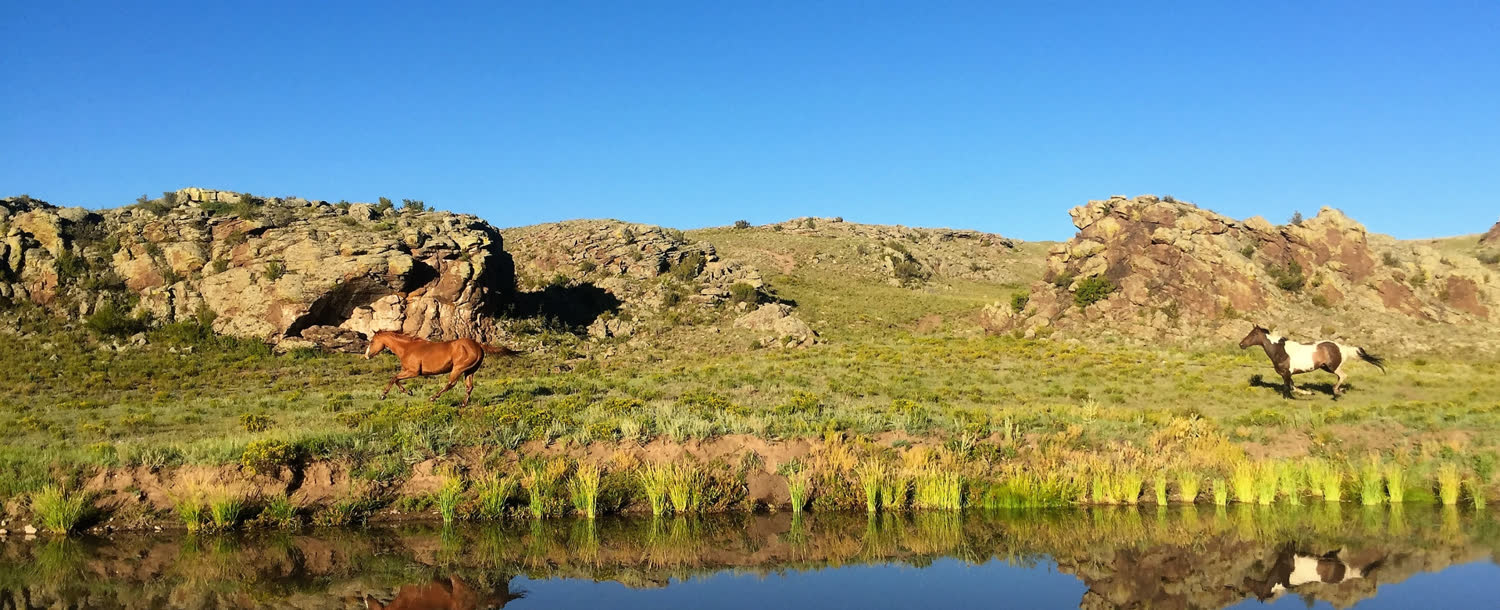
Wide open spaces, no crowds, no traffic, no hassles, and no nose to tail trail riding. Guests here actually participate in all ranch activities, especially riding and cattle work.
You can expect up to 6 hours a day in the saddle and depending on the time of year you visit, there are cattle to drive, roundups, brandings, team penning and roping. Rowse's is also adults-only, meaning you can spend time with friends, family or loved ones without any distractions.
Guests don’t travel out here to learn to fix fences, but instead to satisfy the cowboy in themselves - riding the range and working cattle. This is an experience you’ll remember forever.
Affiliations
Dude Ranchers Association
Ranch type
Also offers
Guest capacity
10
Best for
Adults
Months open
May-Oct, Dec
History & hosts
Our 1+1 ranch started on family land 75 years ago and now covers more than 7,000 acres in the heart of the beautiful sand hills of Nebraska. More than 800 cow/calf pairs and 60 horses have a home here. In fact, our quarter horse breeding program is award winning.
Our name came about when one of our retiring neighbors gave us his brand, 1+1, when we married, and we added that to our own to create Rowse’s 1+1 Ranch. We were honored and touched by his generous gift, a true sign of adoration and respect in the ranching community.
The plant-anchored dunes of the Sand Hills surrounding the region were long considered to be irreclaimable desert. Fortunately, in the 1870s cattlemen began to realize their potential as rangeland for longhorn cattle and this ranching area was born.
Ranch founded
1900s
Guest ranch since
1999
Owners
Jerry and Tammy Rowse
About the owners
Both Jerry and Tammy Rowse’s families have a long-standing passion for ranching, horses, western heritage, and hospitality. Jerry’s great-great-great-grandfather and great-great-grandfather had land claims in the northern part of Garfield County and received their final receipts in 1888 as part of the Homestead Act. Winters in the sandhills are harsh at times. In 1888 Jerrys great-great-great grandfather lost 80 head of cattle in one night in a fierce winter storm. It took True Grit for the folks back then to carve out their ranches. Jerry was raised on land that is just 10 miles from the current Rowse’s 1+1 Ranch.
In 1882, Tammy’s great-great-grandfather, I.B. Nelson, purchased land in southern Garfield County as well as a flour mill on the river close to what became Burwell then he later donated a portion of his land to found the town of Burwell. William~I.B.'s son had a true love for his horses he would carry blankets to cover his horses in the cold of weather. He would frieght flour to Grand Island Nebraska 90 miles away and bring home supplies for area ranches. He started the family tradition of breeding and raising horses and cattle on a ranch just six miles north of Burwell, which remains part of the family estate.
The site of the Rowse’s 1+1 Ranch has been in Tammy’s family for more than 75 years and she was lucky enough to have grown up on the land. Their son Kyle shares his parents’ passion for the land and the animals, and he currently works alongside Jerry and Tammy on the ranch.
Kyle has carried on the love for horses and received numerous awards from the American Quarter Horse Association in roping and competes in the Nebraska State Rodeo Association, Mid-State Rodeo Association, and Professional Rodeo Cowboys Association.
Staff qualities
Gene Kilgore's notes
Community
The 1+1 Ranch also concentrates on supporting the local economy by shopping at the local grocery store, western store, lumber yard, gas stations and Pharmacy. The 1+1 Ranch believes all stores in a small town are essential to the community.
Conservation
The Sand hills are a very delicate terrain, better land management and grazing practices by the ranchers of the Sand Hills have led to less erosion over time, which has kept the natural landscape of the Sand Hills mostly intact. Rowse’s 1+1 Ranch utilize several conservation practices rotational grazing, planting shelter belts, and cross fencing. These conservation practices are also beneficial by creating wildlife habitat.
When to go
May, September, and October are the busiest times for cattle work with branding, working cattle, and moving cattle. June, July, and August open up with more time for roping, sorting, and team penning in the arena. June and September are the nicest months with typically beautiful weather.